The summer was hot on multiple fronts. Renewed geopolitical tensions kept investors on edge, while their spillover effects on energy markets and inflation expectations pushed bond yields higher. Although uncertainty remains elevated and could eventually weigh on economic activity and business confidence, the resilience of growth has so far been remarkable. At the same time, the AI-driven capex boom, together with increased uncertainty surrounding monetary policy under the new Fed Chair, has also contributed to upward pressure on long-term interest rates. We will explore dynamics in fixed income markets in greater detail in forthcoming reports.
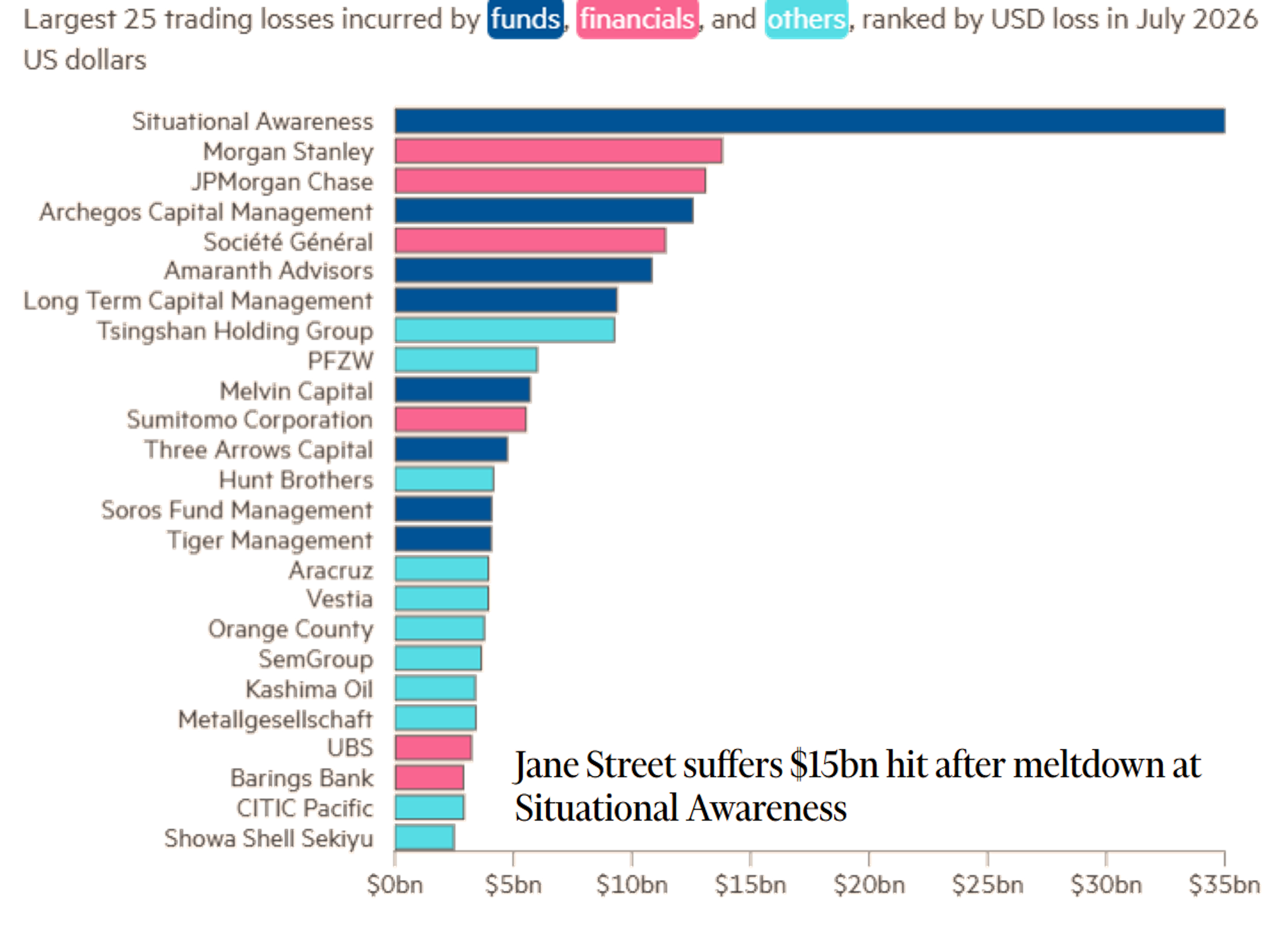
The largest trading loss on record? Equity markets also experienced significant turbulence over the summer. A sharp momentum reversal in early July triggered a sell-off in technology stocks and resulted in a major casualty. The AI-focused hedge fund Situational Awareness reportedly lost around 67% of its value during the month, corresponding to losses estimated between $30bn and $35bn. Fortunately, Citadel stepped in at the end of July, acquiring roughly $16bn of the fund's publicly traded assets at a discount exceeding 10%. By helping to avoid a disorderly liquidation, the transaction likely prevented a much more severe market dislocation. Citadel's intervention also helped stabilize sentiment toward technology stocks, which have staged a meaningful rebound since then.
#1: Bond carry remains attractive, but the unresolved Hormuz situation argues for caution on duration.
We favor the 3-7Y segment of yield curves, which offers attractive carry while limiting duration risk.
Fiscal and monetary policy uncertainty continues to push long-term yields higher, while rising inflation expectations are also putting pressure on the front end of the curve. A de-escalation in the Strait of Hormuz would likely trigger a bull steepening of yield curves.
Within EGBs, we prefer Spain and Italy over France, reflecting increasing concerns about France's fiscal outlook ahead of contentious budget negotiations and the 2027 election cycle.
#2: In FX, we favor long USD/CHF as a hedge against further geopolitical escalation and long USD/JPY volatility as protection against potential BoJ intervention.
Switzerland is less exposed to inflation shocks than either the US or the euro area. Consequently, higher oil prices have supported both USD/CHF and EUR/CHF since the onset of the conflict.
JPY undervaluation against the USD remains a key concern for Japan’s trading partners. USD/JPY has rebounded to 160, and as the pair approaches 165, the likelihood of official intervention increases, potentially fueling FX volatility.
#3: In equities, we remain positive on the industrial revival theme, which is associated with defence, sovereignty and reshoring.
Manufacturing PMIs continue to improve and, although manufacturing's share of GDP is no longer expanding at the global level, industrial policy and state intervention are making a comeback as governments seek to strengthen strategic autonomy and support national champions.
Investment themes linked to the industrial revival include electrification, defence, infrastructure spending, economic sovereignty, and the renaissance of nuclear power.
#4: Across equities and credit, we remain constructive on financials as bond yields stay elevated and economic activity proves resilient.
Strong earnings momentum, shareholder-friendly capital allocation, and attractive valuations continue to underpin the sector.
That said, financials could come under pressure if higher bond yields begin to weigh on risk sentiment and reignite concerns about economic growth and recession risks.
#5: In equities, we expect greater dispersion within the technology sector, although the broader outlook remains attractive given exceptionally strong earnings momentum.
Across the US technology universe, recent valuation adjustments have created compelling opportunities in several segments:
Digital Platforms & Internet: Alphabet, Meta, Reddit, AppLovin, The Trade Desk, GoDaddy
Semiconductors: Micron, Broadcom, Nvidia, Synopsys, Microchip, Intel, NXP Semiconductors
Enterprise Software & Cloud: PTC, ServiceNow, Autodesk, Workday, Adobe, Oracle, Salesforce, Tyler Technologies, Intuit
#6: Position for Europe's M&A boom with Kepler’s EU consolidation basket.
European M&A activity is booming, with deal volumes up 70% year-to-date versus the same period last year, according to Dealogic. Financials, Technology and Telecommunications are among the most active sectors, alongside Energy and Healthcare.
Looking ahead, we expect the regulatory environment to become increasingly supportive of European consolidation as part of the competitiveness agenda inspired by the Draghi Report.
In our view, Telecoms, Banks, Capital Goods, Aerospace & Defence, Chemicals, Metals & Mining, and Semiconductors are likely to be the main beneficiaries of this trend. To capture this opportunity, our analysts have constructed a dedicated equity basket, which we believe is well positioned to benefit from what should prove a durable consolidation cycle.
#7: Diversification across regions and asset classes.
From a geographical perspective, we remain positive on Asian equities, including both EM Asia and Japan, supported by resilient growth prospects and a favorable FX backdrop in Japan. While EM Asia remains highly exposed to the technology cycle through Korea and Taiwan, China provides valuable diversification benefits. Despite its roughly 30% weighting in Information Technology and Communication Services, the correlation between MSCI China and both the Nasdaq and MSCI Korea has been declining, enhancing its diversification appeal. Prospects for additional fiscal stimulus also support our constructive view on Chinese equities heading into year-end.
Gold remains one of the few assets that offers both diversification and supportive fundamentals. Alongside its low long-term correlation with equities, sustained purchases by the PBOC underscore the strategic appeal of gold as a reserve diversification instrument in a world still dominated by US dollar assets.
CHART OF THE WEEK
The downfall of Situational Awareness ranks as the largest trading loss on record