
The sharp rise in bond yields over recent months is increasing pressure on fiscal authorities to proceed with caution. Although the effective interest rate paid on outstanding public debt remains significantly below current market yields, the prospect of a "higher-for-longer" rate environment is further complicating fiscal dynamics. France has attracted particular attention in this regard. However, as we argued last week (link), there has been no material deterioration in sovereign creditworthiness so far, with CDS spreads still trading in the 35-40bp range.
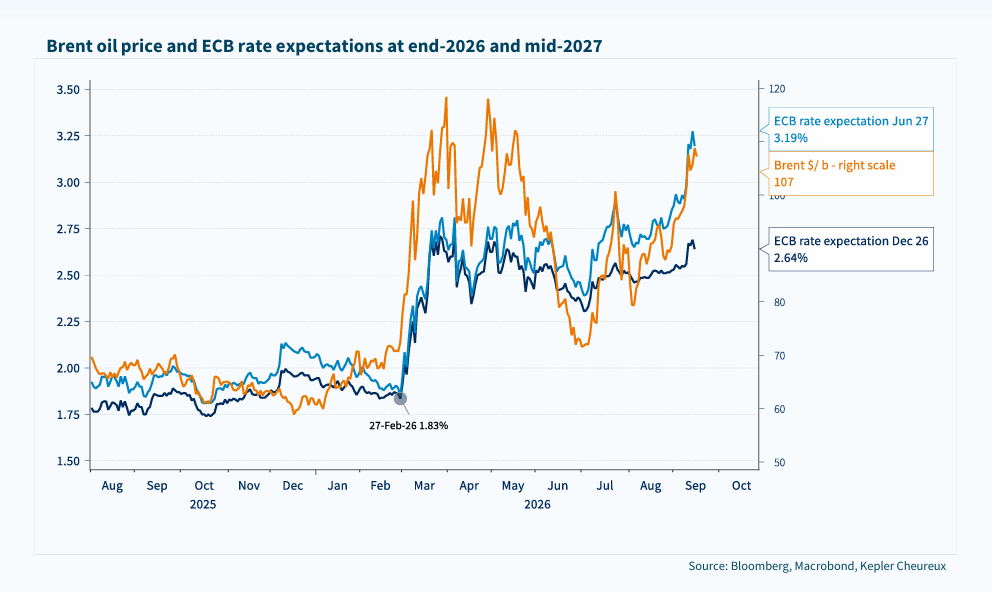
While geopolitical tensions and the energy crisis continue to push policy rate expectations higher, the front end of the yield curve is increasingly driving the rise in long-term bond yields. In our view, a de-escalation in the Middle East remains a necessary condition to alleviate concerns in bond markets. However, there are currently few signs of easing in commodity markets, and the growing likelihood that energy prices will remain elevated for longer, at least until the US midterm elections, prompted us to reduce risk in our asset allocation portfolio last week.
The outlook for bond markets, therefore, remains challenging. Nevertheless, several developments could alter the current trajectory:
A shift in US policy towards Iran. A Trump administration reversal on Iran would likely push oil prices back toward USD 80/bbl. However, we believe the probability of such a shift has declined in the near term, as adopting a softer stance on Iran ahead of the midterm elections would appear politically inconsistent. Iran could also be forced to make concessions as economic conditions deteriorate, but the country seems capable of withstanding the pressure for several more months and may seek to claim a form of political victory should Democrats perform strongly in the elections.
More decisive fiscal communication. Governments could alleviate market concerns by providing clearer and more credible signals regarding expenditure restraint. Convincing investors that meaningful spending cuts can be delivered is no easy task, given that a large share of public expenditure is tied to social security and pension commitments. Nevertheless, any positive surprise on fiscal deficits would be welcomed by markets. With the ongoing energy crisis, however, merely meeting current fiscal targets already appears challenging, let alone outperforming them.
A pause in quantitative tightening. European central banks, particularly the ECB and the BoE, could choose to halt their quantitative tightening programmes and stabilise their balance sheets. The BoE is notably pursuing active QT through gilt sales, rather than simply allowing bonds to mature. In this context, we maintain an overweight stance on UK Gilts.
Finally, a moderation in the pace of AI development could also help alleviate inflation concerns stemming from the growing energy demand of data centres.
Overall, our base case remains one of higher rates for longer. That said, bond yields may be approaching their peak, as a substantial amount of monetary tightening is already priced into markets. While we do not yet see a clear catalyst for a sustained decline in yields, the scope for further upside appears increasingly limited..
CHART OF THE WEEK
Shifts in oil prices are driving policy rate expectations