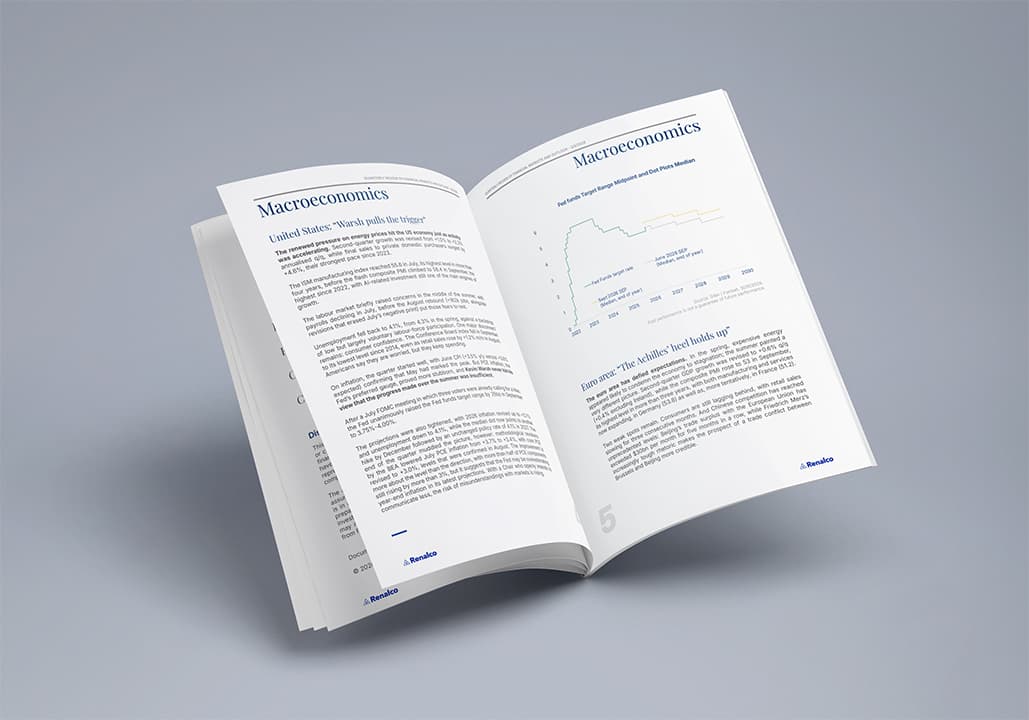

The second quarter of 2026 will be remembered as one of an energy shock that peaked before receding. The conflict in Iran and the blockade of the Strait of Hormuz, which had shattered the “year of the oil surplus” scenario in March, drove Brent above $115 a barrel in April, before a slow de-escalation (ceasefire, Doha talks, gradual reopening of Hormuz) brought it back toward $73 by the end of the period, its steepest quarterly drop since 2020.
Between these two extremes, the global economy lived to the rhythm of imported inflation. Price indices flared on both sides of the Atlantic, forcing central banks to definitively shelve any inclination to ease: the Warsh Fed, the ECB and the BoJ all turned more hawkish. But behind this common denominator, the quarter above all confirmed a fault line already visible.
The U.S. economy, carried by the artificial-intelligence investment cycle, is absorbing the shock far better than the euro area, whose energy dependence remains its Achilles’ heel. The retreat in prices at the end of the quarter ultimately offered welcome relief, triggering a powerful rebound in risk assets while gold, for its part, paid dearly for the rise in real yields.
To automatically receive our quarterly reviews and monthly digests of our Insights by email, we invite you to subscribe by clicking on "Sign-Up" in the top menu.